Drainage Solutions That Actually Prevent Pooling
Flat Roofing Services in Phoenix for low-slope roofs with standing water or commercial buildings needing leak-resistant systems
Standing water collects in depressions on flat roofs after monsoon rains, accelerating membrane deterioration and eventually leaking through seams weakened by constant moisture exposure. Castillo Roofing LLC installs and replaces flat roofing systems in Phoenix, improves drainage on roofs where water pools, and applies protective coatings that extend system life. Commercial and residential properties with flat or low-slope roofs need these services when leaks develop at seams, when membrane surfaces crack from UV exposure, or when improper slope causes water to remain on the roof for days after storms.
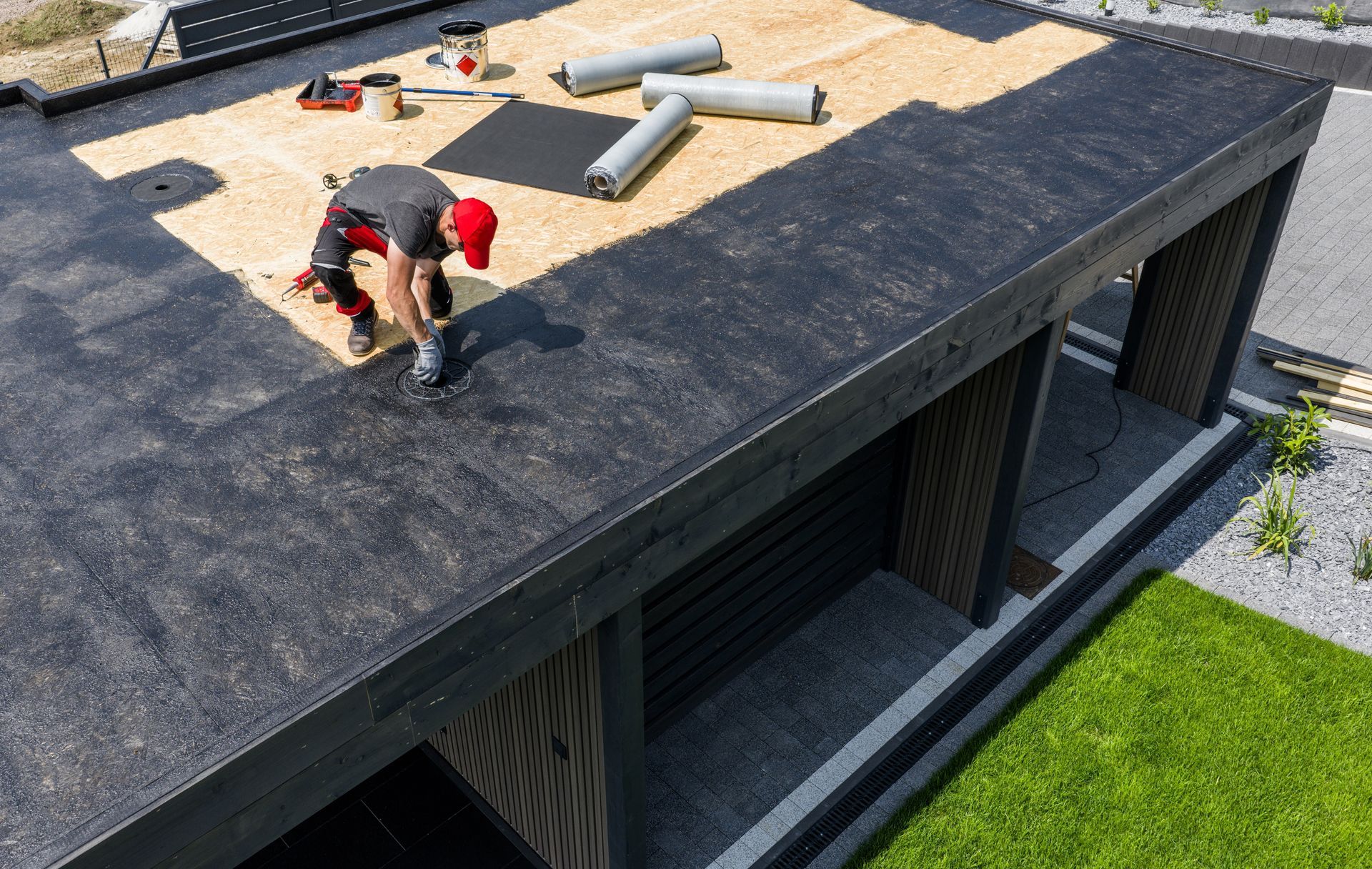
Flat roof installation involves preparing the roof deck, installing insulation if required, then applying a waterproof membrane or coating system that can withstand foot traffic and equipment loads. Drainage improvements address the underlying cause of pooling water by adding tapered insulation that creates positive slope toward drains, or by installing additional drains and scuppers where water accumulates. Phoenix's intense sun degrades roofing membranes rapidly, making regular coating applications part of preventative maintenance rather than optional upgrades.
Arrange an on-site assessment to identify drainage problems and determine whether your flat roof needs targeted repairs or full replacement.
What Proper Flat Roofing Installation Requires
Installing a flat roofing system begins with ensuring the deck is clean, dry, and structurally sound, since any moisture trapped under the new membrane will cause blistering and premature failure. The membrane—whether TPO, EPDM, modified bitumen, or built-up roofing—gets installed according to manufacturer specifications for seam overlap, adhesive application, and fastener placement. Flashing around roof penetrations and at parapet walls must integrate with the membrane to prevent water from entering at these transition points, which are the most common leak locations on flat roofs.
Once the work is complete, water flows directly to drains and scuppers without pooling in low spots, and you no longer see standing water on the roof 48 hours after rain. Leaks stop appearing at ceiling penetrations and along interior walls below the roofline. The building's interior stays dry during storms, and the roof membrane remains intact without splits or separations at seams.
Roof coatings add a reflective layer over the membrane that reduces surface temperature and extends material life by protecting against UV damage. Preventative maintenance includes inspecting drains for blockages, checking seams for separation, and recoating high-wear areas before leaks develop. Flat roofs in commercial applications require access for HVAC servicing, which means the roofing system must tolerate repeated foot traffic without puncturing or tearing.
What Owners Want to Know About Flat Roofs
Flat roofing systems differ significantly from sloped roofs in how they manage water and how they fail, so property owners often ask about drainage, maintenance, and when replacement becomes necessary.
What causes water to pool on flat roofs even though they're designed to drain?
Flat roofs aren't actually flat—they have a slight slope, typically one-quarter inch per foot, to move water toward drains. Pooling occurs when the roof deck sags over time, when insulation compresses unevenly, or when the original construction didn't provide adequate slope. Tapered insulation systems correct this by building up low areas to restore positive drainage.
How do drainage improvements solve recurring leak problems?
Water that pools on a flat roof stays in contact with the membrane continuously, finding any weak point in seams or around penetrations and eventually working through to cause leaks. Improving drainage so water leaves the roof within 48 hours prevents this constant exposure and significantly extends membrane life.
Why do flat roof membranes need periodic coating in Phoenix?
UV radiation breaks down the chemical bonds in roofing membranes, causing them to crack and lose waterproofing ability. Reflective coatings shield the membrane from UV exposure and reduce surface temperatures, which slows degradation and can double the roof's functional life.
When should a flat roof be replaced instead of repaired?
Replacement is necessary when the membrane shows widespread cracking or separation, when multiple leaks occur across different roof areas, or when the decking has sustained water damage that compromises structural integrity. Isolated leaks at a seam or around a penetration are repairable, but system-wide failure requires complete replacement.
What's involved in preventative maintenance for flat roofs?
Maintenance includes clearing debris from drains and gutters, inspecting seams and flashing for separation, checking for punctures or tears in the membrane, and recoating high-traffic areas or spots showing UV damage. Castillo Roofing LLC recommends twice-yearly inspections—before and after monsoon season—to catch problems early.
Flat roofing systems protect commercial and residential properties when they're properly installed and maintained to handle Phoenix's climate. Castillo Roofing LLC addresses drainage issues that cause recurring leaks and installs durable membrane systems designed for long-term performance. Call (602) 501-8125 to discuss your flat roof concerns and schedule an inspection that identifies specific problem areas.