
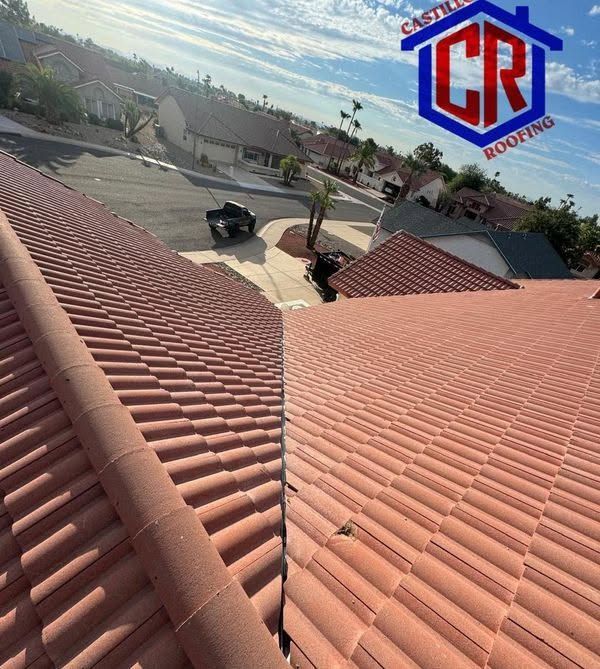
Tile Roofs Restored to Original Weather Protection
Tile Roofing Services in Phoenix for broken concrete or clay tiles that allow underlayment exposure or roofs with failing underlayment beneath intact tiles
Your tile roof looks intact from the ground, but water stains appear on interior ceilings after monsoon rains because the underlayment beneath the tiles has deteriorated from decades of heat exposure and no longer provides a waterproof barrier. Castillo Roofing LLC installs new tile roofs, replaces entire tile systems when underlayment failure is widespread, and repairs broken individual tiles to maintain your roof's protective coverage. Clay and concrete tile roofs in Phoenix need service when tiles crack from thermal stress, when underlayment becomes brittle and tears, or when improper installation allows wind-driven rain to penetrate beneath the tiles.
Tile roofing work ranges from replacing a few broken tiles to complete tear-off and reinstallation when the underlayment has failed across the entire roof. The tiles themselves often last 50 years or more, but the underlayment beneath them degrades in 20 to 30 years due to heat and UV exposure that penetrates through gaps between tiles. Underlayment replacement requires removing all tiles, installing new synthetic underlayment rated for high-temperature applications, then reinstalling the tiles in their proper positions with updated attachment methods that resist wind uplift.
Schedule a roof inspection to assess tile condition and determine whether underlayment replacement is needed beneath your existing tiles.
What Happens During Tile Roof Replacement
Tile replacement begins by carefully removing the existing tiles, which are heavy—concrete tiles weigh up to 10 pounds each—and must be handled to avoid breaking additional pieces. The old underlayment is stripped away, the roof deck is inspected for damage, and any deteriorated sheathing is replaced before new high-temperature underlayment is installed. Tiles are then reinstalled using foam closures at ridges and hips to prevent wind-driven rain and pest entry, and mechanical fasteners secure tiles in high-wind zones according to current building codes.
After the work is finished, your roof sheds water properly with no leaks at valleys or around penetrations, and the tiles sit uniformly without gaps or lifted edges. Castillo Roofing LLC matches replacement tiles by profile and color to maintain consistent appearance, though weathered tiles often show color variation from new pieces until the replacements age under UV exposure. Interior ceiling stains stop growing, and attic spaces remain dry even during heavy monsoon downpours.
Tile roof inspections identify broken tiles before they allow enough water through to damage underlayment and decking, which prevents minor repairs from escalating into full underlayment replacement projects. Individual tile replacement addresses storm damage, impact from falling branches, or cracks from thermal expansion before surrounding tiles are affected. The inspection also evaluates flashing condition at chimneys and skylights, since these metal components often fail before the tiles themselves require replacement.
Questions About Tile Roof Service and Repair
Tile roofs present unique challenges compared to shingle or flat roofing systems, and understanding what drives their failure and how they're repaired helps you maintain your investment.
What causes concrete and clay tiles to crack in Phoenix?
Thermal cycling—tiles heating to 150 degrees during the day and cooling to 70 degrees at night—creates expansion and contraction stress that eventually cracks brittle materials. Concrete tiles are more prone to cracking than clay tiles, and impact from tree branches or foot traffic during maintenance also causes breakage.
How is underlayment replaced without damaging the existing tiles?
Each tile is carefully removed, labeled by position, and stacked for reinstallation after the new underlayment goes down. Tiles are heavy and fragile, so experienced crews minimize breakage during removal, though some percentage of older tiles typically crack during the process and need replacement.
Why does underlayment fail before the tiles wear out?
Underlayment sits directly on the hot roof deck and is exposed to heat radiating up through the deck and down through gaps between tiles, which causes organic felt underlayment to become brittle and tear. Synthetic underlayment lasts longer in high-temperature applications, and modern tile installations use these products to extend service life beyond 30 years.
Can broken tiles be replaced individually without affecting surrounding tiles?
Individual tiles can be removed and replaced by sliding them out from under the overlapping tile above and installing a new tile in the same position. This works for scattered damage but becomes impractical when numerous tiles across the roof need replacement, at which point full tear-off is more cost-effective.
How often should tile roofs be inspected in Phoenix?
Tile roofs benefit from inspection every three to five years to identify broken tiles, check flashing condition, and assess underlayment integrity before leaks develop. Storm events warrant immediate inspection to document damage for insurance claims and prevent small problems from worsening during subsequent monsoons.
Tile roofs provide long-term durability and energy efficiency when properly maintained, and addressing underlayment failure before it causes structural damage protects your investment. Castillo Roofing LLC evaluates tile and underlayment condition to recommend whether targeted repairs or complete replacement best serves your property. Reach out to arrange a tile roof assessment and receive detailed recommendations specific to your home's needs.