
Roofs Built to Handle Decades of Heat
Residential Roof Replacement in Phoenix for aging shingles that have lost granule coverage or tile systems with multiple cracked pieces
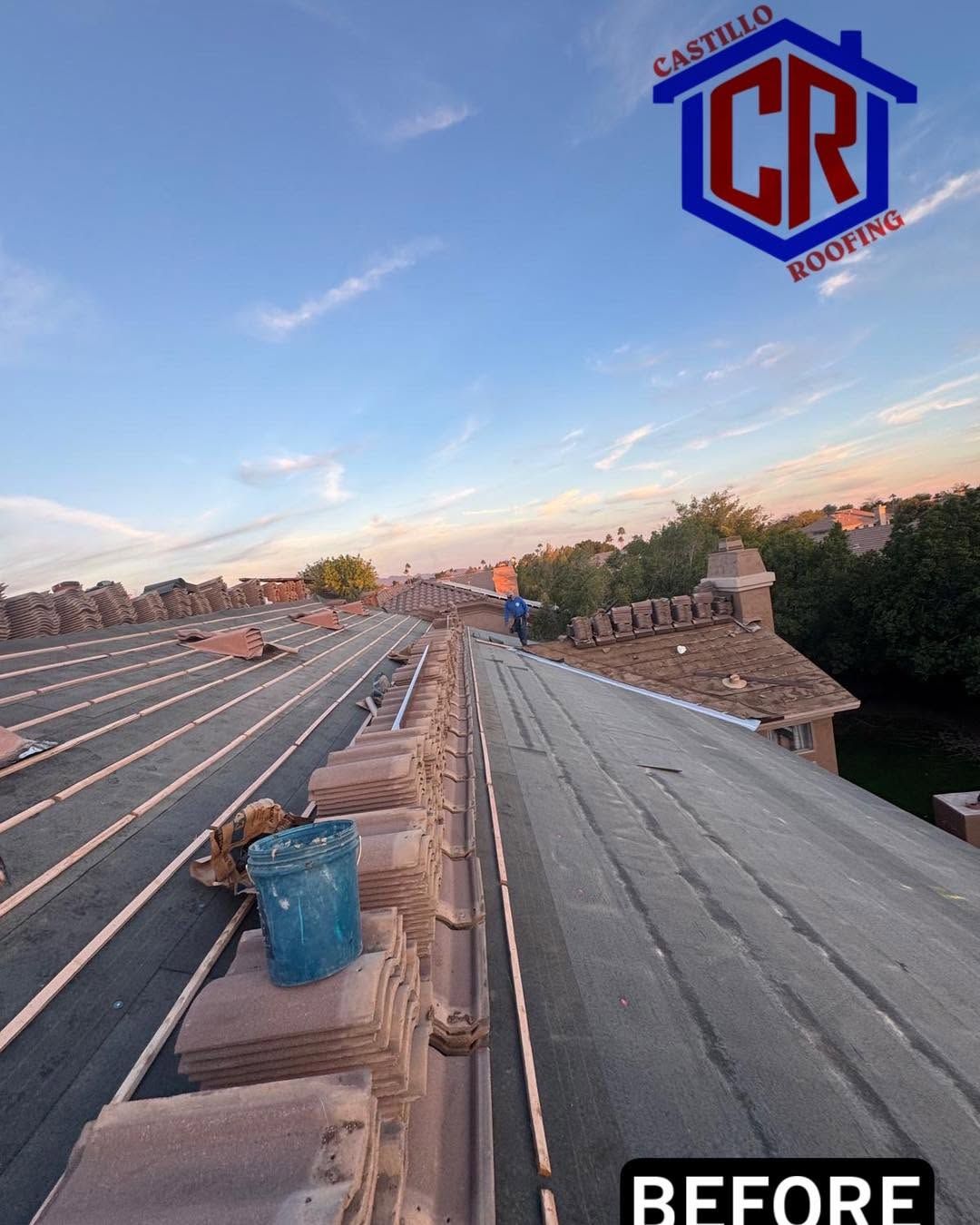
Castillo Roofing LLC replaces residential roofs throughout Phoenix using asphalt shingles, concrete or clay tile, and flat roofing materials designed for desert conditions. You need a roof replacement when your current system shows widespread failure—shingles curling at the edges and missing granules, tile pieces cracking from thermal expansion, or flat membrane surfaces developing multiple leak points. The work removes every layer down to the deck, addresses structural concerns, and installs a system engineered to reflect heat rather than absorb it.
Roof replacement involves tearing off the existing material to expose the deck, inspecting sheathing for damage from moisture intrusion or pest activity, then installing underlayment and a new roofing system matched to your home's design and your budget. Phoenix roofs endure extreme UV exposure and temperatures exceeding 160 degrees on surface materials during summer months, which accelerates deterioration and makes material selection critical. Energy-efficient options include cool-roof shingles with reflective granules, light-colored tile that deflects rather than stores heat, and coated systems that lower attic temperatures by 20 degrees or more.
Schedule a property evaluation to assess your roof deck condition and review material options suited to your home's structure.
What Changes After a Full Roof Replacement
A complete roof replacement starts with removing all existing material, which reveals any decking that needs repair or replacement due to water damage or warping. The new underlayment acts as a secondary moisture barrier, and the installation follows manufacturer specifications for fastener placement, overlap, and flashing integration to prevent wind uplift and water intrusion. Proper ventilation is addressed during replacement to reduce attic heat buildup, which extends the life of the new materials and lowers cooling costs.
After the work is finished, you'll see consistent color and texture across the entire roof surface with no patched areas or mismatched materials. Your attic temperature drops noticeably if energy-efficient materials were installed, and your cooling system runs less frequently during peak summer hours. Interior ceiling stains stop expanding, and you no longer hear water dripping inside walls during monsoon storms.
The replacement includes disposal of old materials, which for tile roofs often means hauling several tons of broken concrete or clay off the property. Castillo Roofing LLC assists with insurance claims when storm damage triggers the need for replacement, providing documentation and material specifications that adjusters require to process approvals. The company handles permitting and inspection scheduling, ensuring the new roof meets current building codes for wind resistance and fire rating.
Questions Property Owners Ask Before Replacing a Roof
Roof replacement raises practical concerns about timing, material performance, and how the work affects daily life at your home. Phoenix's climate and the variety of roofing materials common in the area shape most of these questions.
What preparation is required before the tear-off begins?
You'll need to clear items from your attic and remove wall hangings inside the house, since the vibration from tearing off old material can dislodge framed pictures and shelves. Vehicles should be parked away from the house to avoid damage from falling debris, and outdoor furniture near the roofline needs to be relocated.
How does monsoon season affect replacement timing?
Scheduling roof replacement between October and April avoids the monsoon period when sudden storms can drench an exposed roof deck, though emergency tarping is used if unexpected weather arrives during the project. Most replacements take two to four days depending on roof size and material type, and work stops temporarily if rain begins.
Why do tile roofs cost more to replace than shingle roofs?
Tile weighs significantly more than asphalt shingles, requiring additional labor to remove and dispose of the old material, and the installation process involves setting each tile individually rather than nailing down strips of shingles. Concrete and clay tiles also cost more per square foot than composite shingles, though they last 50 years or longer compared to 20 to 25 years for standard shingles.
What happens if the roof deck needs repair during replacement?
Once the old roofing material is removed, any plywood or OSB sheathing that shows rot, warping, or structural damage gets replaced before the new underlayment and roofing go down. This is common in areas where leaks went undetected, and the cost depends on how many sheets require replacement.
How do energy-efficient roofing materials reduce cooling costs in Phoenix?
Cool-roof shingles with reflective granules and light-colored tile reduce surface temperatures by reflecting solar radiation instead of absorbing it, which lowers attic temperatures and decreases the workload on your air conditioning system. Homeowners typically notice a 10 to 15 percent reduction in summer cooling costs after installing reflective roofing materials.
Castillo Roofing LLC evaluates your existing roof structure and helps you select materials that balance upfront cost with long-term performance in Phoenix's intense heat. Request a detailed estimate to compare material options and understand what the replacement process involves for your specific home.